
AI search is frequently discussed as if it were a single new channel. A user asks a question, a large language model generates an answer, and somewhere behind the interface, the web serves as the source.
But that framing is far too simple.
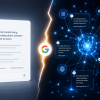
ChatGPT, Gemini, and Perplexity do not merely represent three competing products. They represent three fundamentally different philosophies of assembling authority. Each system draws from a distinct source environment, presents evidence differently, and reshapes the relationship between information, visibility, and brand trust.
The rise of generative search is not just changing how people find answers. It is fundamentally changing how answers are built.
From Ranked Lists to Editorial Synthesis
In traditional search, visibility was structured entirely around ranked lists. A user entered a query, compared blue links, snippets, maps, reviews, or product cards, and decided where to click. Authority was distributed across the search results page. The ranking itself was visible, even if the algorithm behind it remained opaque.
AI search compresses that entire process. It retrieves, selects, summarizes, and cites information before the user ever sees a list of competing sources. The result is not simply a new interface; it is a completely new machine-driven editorial layer.
The defining question for businesses is no longer only: Which page ranks first?
The question has become: Which sources are considered reliable enough to be woven into the answer at all?
AI Search Is Not One System
Early citation research clearly demonstrates that the major AI search engines do not rely on the same source patterns.
According to a comprehensive industry study by Yext, which analyzed more than 6.8 million citations across 1.6 million AI-generated responses, meaningful differences exist between the platforms:
- Gemini trusts what your brand says about itself, citing brand-owned websites and Google’s own structured data infrastructure significantly more frequently.
- ChatGPT trusts what the internet agrees on, leaning heavily on third-party sites, directories, and review platforms to synthesize a broader web consensus.
- Perplexity trusts industry experts and customer reviews, showing a strong tendency toward niche, specialized, and industry-specific sources to back up its claims.
Ultimately, these systems do not all trust the same kinds of evidence. Digital authority is no longer just a matter of being indexed. It is increasingly a matter of whether your content is retrievable, interpretable, corroborated, and instantly useful to a generative system.
Introducing the “Source Stack”
To successfully navigate this new landscape, businesses must understand the concept of the Source Stack. This term describes the layered set of information environments an AI system relies on to produce answers: owned websites, search indexes, maps data, business listings, reviews, forums, academic papers, and structured semantic data.
Over the coming weeks, we will dissect this architecture in an exclusive mini-series.
What you can expect in the upcoming parts of this series:
- The Data Origin: A deep-dive into where Gemini, ChatGPT, and Perplexity pull their sources from individually.
- The Strategic Analysis: What these citation patterns reveal about digital reputation, search infrastructure, and the role of specialized expertise.
- The GEO Playbook: Concrete, system-specific content and technical levers to ensure your brand is selected as a trusted reference by different AI crawlers.
The defining shift of generative search is not that users receive fewer links. It is that machines increasingly decide which parts of the web become answerable in the first place.
Stay tuned for our next article, where we will dive straight into the Google ecosystem to analyze how Gemini structures the web.
Source and Reference:
Chamberlain, L. 2025. “AI Visibility in 2025: How Gemini, ChatGPT, and Perplexity Cite Brands.” Yext Research. Available at yext.com
Visited 25 times, 1 visit(s) today