The Core Pipeline: Retrieval-Augmented Generation
Gemini does not simply guess the next word based on its training data. It uses a framework called Retrieval-Augmented Generation.
When a user asks a complex question, Gemini triggers a real-time search behind the scenes. It queries Google’s massive, core web index to fetch live web pages. These pages are then instantly analyzed, summarized, and woven into the AI Overview at the top of the search results page.
Debunking the Myths: Google Warns Against AI Tricks
The Failure of Content Chunking
The Reality of Structured Data for AI
The Reality of Structured Data: Content vs. Identity
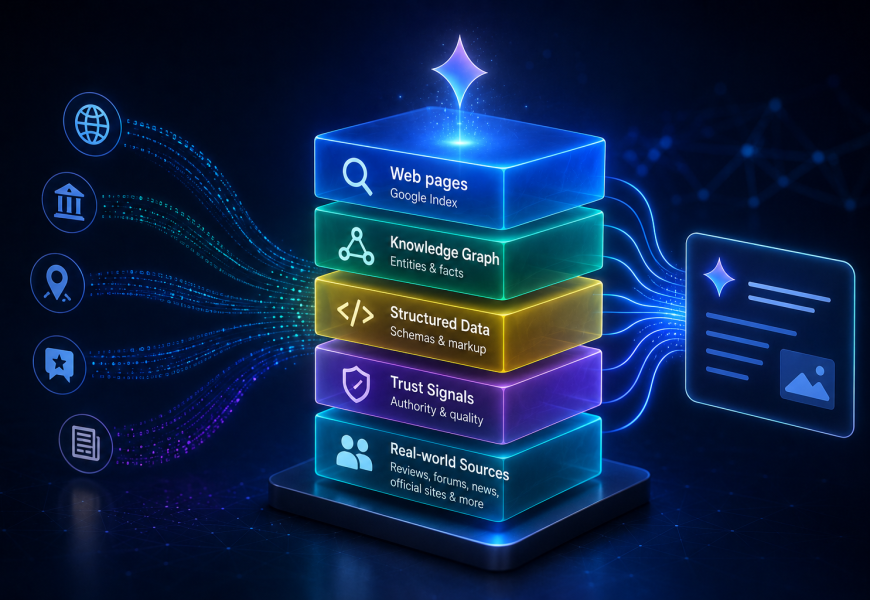
The Three Pillars of Gemini’s Source Stack
- First-Party Brand Websites
Gemini heavily trusts what a brand says about itself. When answering queries about product specifications, corporate details, or services, it prefers primary sources over third-party blogs or affiliate review platforms. - The Google Knowledge Graph
This proprietary database maps real-world entities, organizations, and authors. If your brand is established as a verified entity within this graph, Gemini treats your information with a higher baseline of trust. - Google Merchant Center and Structured Data
For commercial intents, Gemini draws factual data directly from live structural feeds, such as Google Merchant Center, ensuring that pricing and availability are pulled from verified corporate databases.
While AI Overviews are not identical to Gemini, they provide a useful window into how Google’s generative search layer may select and cite sources.
AI Overviews Don’t Follow Classic Search Rankings
A recent study on Google AI Overviews shows that the source logic of generative search systems can differ significantly from traditional organic rankings. According to the study, nearly 30% of the domains cited in AI Overviews did not appear on the first page of organic search results for the same queries. For brands, this means that visibility in Google AI is not automatically the same as achieving a top ranking in classic search. Instead, content needs to be structured in a way that allows AI systems to recognize it as a reliable and cite-worthy source — through clear formatting, consistent entity signals, topical authority, and machine-readable data.
What Changes? The Shift in Traffic Quality
How to Optimize for the Gemini Ecosystem
- Implement Comprehensive Schema Markup: Use detailed JSON-LD structured data for products, organizations, authors, and FAQs. Give Gemini a clean, machine-readable layer to scrape.
- Write in Direct Answer Formatting: Structure your introductory paragraphs using the inverted pyramid style. Provide a definitive, factual statement in the first sentence so Gemini’s RAG system can easily extract it as a summary snippet.
- Keep Feeds Updated: If you run an e-commerce platform, ensure your Google Merchant Center data matches your landing pages perfectly. Discrepancies in price or availability cause Gemini to drop the source instantly.
- Build Entity Authority: Invest in clear digital footprints. Clean up your business profiles, ensure consistent information across the web, and make sure your authors have clear biographical authority.