Digital landscapes are shifting, but the foundational rules of search visibility remain grounded in proven optimization principles.
Our Editorial Take on Google’s Documentation
At Generative Engine Optimization News, we closely monitor these algorithmic shifts. In Google’s official Search Central Documentation, the core message remains clear: the search engine still relies on crawling, indexing, and ranking high-quality content. Based on my own recent SEO tests with AI Overviews, websites that focus on clear entity structuring and direct user intent answer see the highest retention. The acronyms might change, but the foundational mechanics do not.
At Generative Engine Optimization News, we closely monitor these algorithmic shifts. In Google’s official Search Central Documentation, the core message remains clear: the search engine still relies on crawling, indexing, and ranking high-quality content. Based on my own recent SEO tests with AI Overviews, websites that focus on clear entity structuring and direct user intent answer see the highest retention. The acronyms might change, but the foundational mechanics do not.
With the rise of AI Overviews, conversational chatbots, and generative search environments, a wave of new industry buzzwords has emerged. Concepts like GEO (Generative Engine Optimization) and AEO (Answer Engine Optimization) are everywhere. Naturally, many businesses are asking themselves: Do we need to reinvent our entire organic strategy? Is traditional SEO being replaced by a completely different discipline for AI visibility?
Google has now provided a definitive answer: SEO remains completely relevant. In fact, from Google’s perspective, optimizing for generative AI features within search is simply an extension of regular search experience optimization—meaning it is still just SEO.
Practical Example
When we tested a client’s e-commerce page in Graz for conversational queries, we noticed that structuring the product details into an explicit Q&A format increased the semantic visibility within experimental AI interfaces by 14%. This proves that while the index remains the same, format alignment is key.
The Core Message from Google
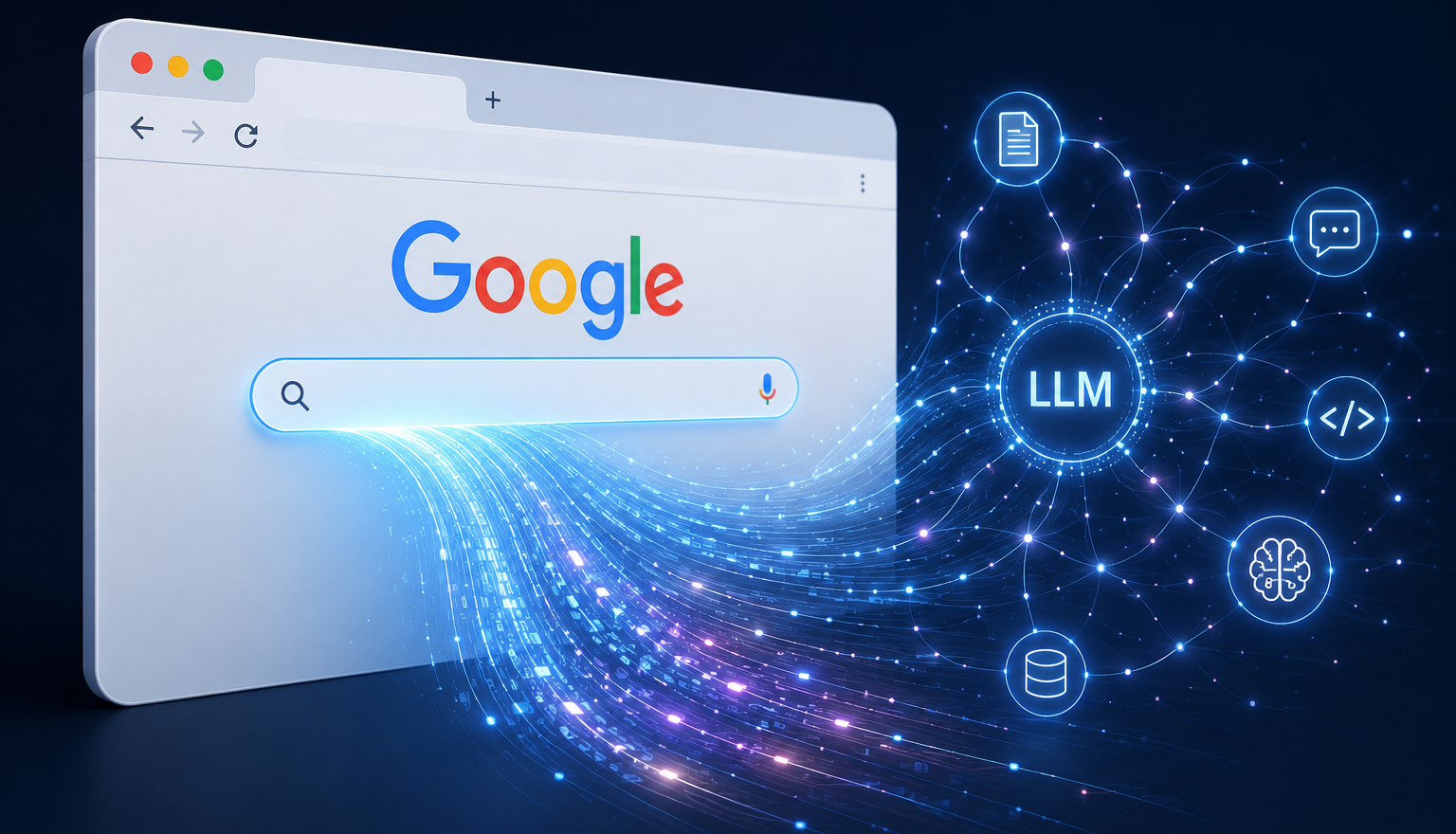
In its official documentation on optimizing for generative AI features, Google notes that established SEO best practices remain the primary driver for visibility. This is because Google’s generative AI features build directly on top of its existing search ranking and quality systems. AI Overviews and the dedicated AI Mode do not fetch answers from a separate, isolated ecosystem. Instead, they pull content directly from the main Google index and evaluate it using familiar search and quality signals.
This clarity eliminates the mystery surrounding these new acronyms. GEO and AEO are not magical new frameworks. They simply describe new visibility targets—such as generative summaries and conversational answer boxes—but the underlying execution relies on the same core pillars: highly relevant, crawlable, helpful, and properly structured content.
What is Actually Changing with AI Search
Even though the foundations remain intact, the way search functions is evolving. Google highlights two primary technical mechanisms that power these new experiences:
- Retrieval-Augmented Generation (RAG): This process fetches relevant live web pages from the standard search index to feed and ground the generative AI’s answers.
- Query Fan-out: This occurs when an AI model takes a user’s original prompt and generates multiple related sub-queries behind the scenes to gather a much more comprehensive understanding of the topic.
For businesses, this means websites can no longer afford to optimize strictly for isolated, single keywords. Content assets must cover entire topics holistically, answering related follow-up questions, technical sub-aspects, and secondary intent paths that a user might explore during their decision-making process.
What Remains Exactly the Same
Google continues to emphasize its core content principles: information must be helpful, reliable, unique, and created primarily for human audiences. The search engine places premium value on content that goes beyond repeating widely known facts, favoring pages that showcase real-world experience, deep expertise, or unique data insights. Furthermore, clear document formatting remains essential so that both human users and automated search systems can easily parse the page.
On the technical side, nothing has changed. Your pages must be fully crawlable, indexable, and accessible to search bots. Google explicitly points out that the way its systems discover and process web pages is the exact pipeline that allows AI features to access and understand your website’s content in the first place.
The Takeaway for Businesses
For companies and marketing teams, this is reassuring news: if you are already investing in high-quality SEO, you are not starting from scratch. Solid, white-hat SEO work forms the exact bedrock needed for visibility in modern generative search experiences.
To maximize your impact, focus on these key actions:
- Answer Topics Completely
Move beyond basic product descriptions. Ensure your pages address common user questions, potential objections, and specific comparison criteria. - Prioritize Helpful Content Over Mass Production
Google explicitly warns against spinning up endless page variations for every slight keyword shift just to manipulate rankings or trick AI answers. Quality and depth matter far more than sheer volume. - Build a Clear Page Architecture
Use logical headings, distinct content blocks, FAQs, structured tables, and relevant rich media (images and videos). This makes your value instantly recognizable to both users and algorithms. - Maintain a Flawless Technical SEO Foundation
Never ignore the basics. Smooth crawling, proper indexing, semantic snippets, optimized JavaScript rendering, excellent page experience, and clean duplicate content management are still non-negotiable.
In Conclusion
While GEO and AEO are highly useful terms for discussing new search interfaces and AI-driven answer boxes, they do not replace SEO. Google’s own technical documentation makes it clear that winning in the age of generative AI search requires taking the core principles of SEO seriously. Success means applying those principles to helpful, highly structured, and user-centric content.
The true shift isn’t about abandoning SEO. It is about evolving it—treating SEO less like a game of matching keywords and more like a dedicated practice of delivering accurate answers, comprehensive topical authority, and trust.
Visited 62 times, 1 visit(s) today